Published
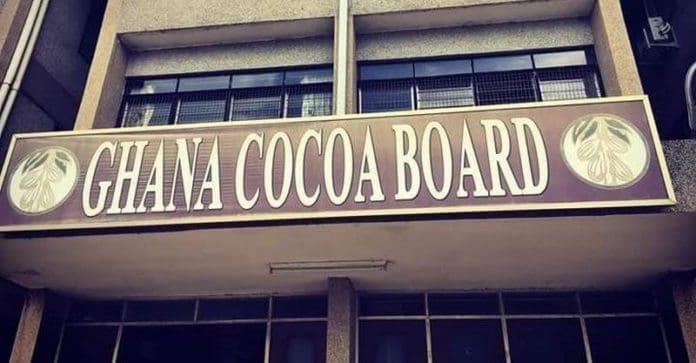
GHANA—The Ghana Cocoa Board (COCOBOD) has obtained a US$100 million funding package from the World Bank. This financing will be used to restore aging farms in the country’s six main cocoa-growing districts.
The board revealed it intends to use the funds to support land preparation, provision of farm inputs (seedlings, suckers, fertilizer, and machinery), and facilitate cutting down of cocoa seedlings that have lived for more than 20 years.
The funds will also provide farmers with extension services and education on best farming practices to optimize yields.
Joseph Boahen Aidoo, COCOBOD’s CEO, revealed the rehabilitation process will help rejuvenate farms by removing trees ravaged by disease and those that have outlived their lifespans and become moribund.
Boahen Aidoo explained, “Once cocoa hits 20 years and above, it has spent its life span, and from that stage, you realize that it bears no fruits, no pods, and the flowers don’t come, yet the farmer would be maintaining such a farm, and this is not productive.”
The funding package is intended to improve Ghana’s cocoa production in the medium to long term. It comes at a time when the cocoa market is experiencing significant supply chain disruptions.
The country’s cocoa sector has been affected by illegal mining, smuggling, disease, and bad weather, which have caused significant shortages in the world’s second-largest cocoa producer. According to COCOBOD, Ghana is expected to produce 425,000 tons of cocoa in the 2023/2024 season, a significant drop from the 683,000 tons produced in the previous season.
In May, the board announced it would borrow up to US$1.5 billion to compensate for lower-than-expected production and finance cocoa purchases for the 2024/2025 season as part of its short-term strategy to address the current problems facing the sector.
These short-term and long-term interventions are expected to induce the cocoa sector’s recovery and ease supply chain challenges in the market.
The board remains optimistic these interventions will go a long way in improving the sector. COCOBOD predicts the country will produce 700,000 tons in the 2024/2025 season that starts in September.
Liked this article? Subscribe to Food Business Africa News, our regular email newsletters with the latest news insights from Africa and the World’s food and agro industry. HERE
No related posts.
We use cookies to improve your experience on our site. By using our site, you consent to cookies.
Manage your cookie preferences below:
Essential cookies enable basic functions and are necessary for the proper function of the website.
These cookies are needed for adding comments on this website.
Google's current Sign in with Google client library. It renders the Google sign-in button, or the One Tap prompt, so visitors can log in to your site with their Google account. It replaces the older Google Sign-In platform library.
Service URL: policies.google.com (opens in a new window)
Google Tag Manager simplifies the management of marketing tags on your website without code changes.
Statistics cookies collect information anonymously. This information helps us understand how visitors use our website.
Google Analytics is a powerful tool that tracks and analyzes website traffic for informed marketing decisions.
Service URL: policies.google.com (opens in a new window)
WPMU DEV Analytics is the visitor statistics feature of the WPMU DEV Dashboard plugin. It reports traffic and visitor behavior inside The Hub using a Matomo analytics instance hosted by WPMU DEV.
Service URL: wpmudev.com (opens in a new window)
Marketing cookies are used to follow visitors to websites. The intention is to show ads that are relevant and engaging to the individual user.
AddToAny provides share and follow buttons that let visitors post your pages to social networks, messaging apps, and bookmarking services.
Service URL: www.addtoany.com (opens in a new window)